
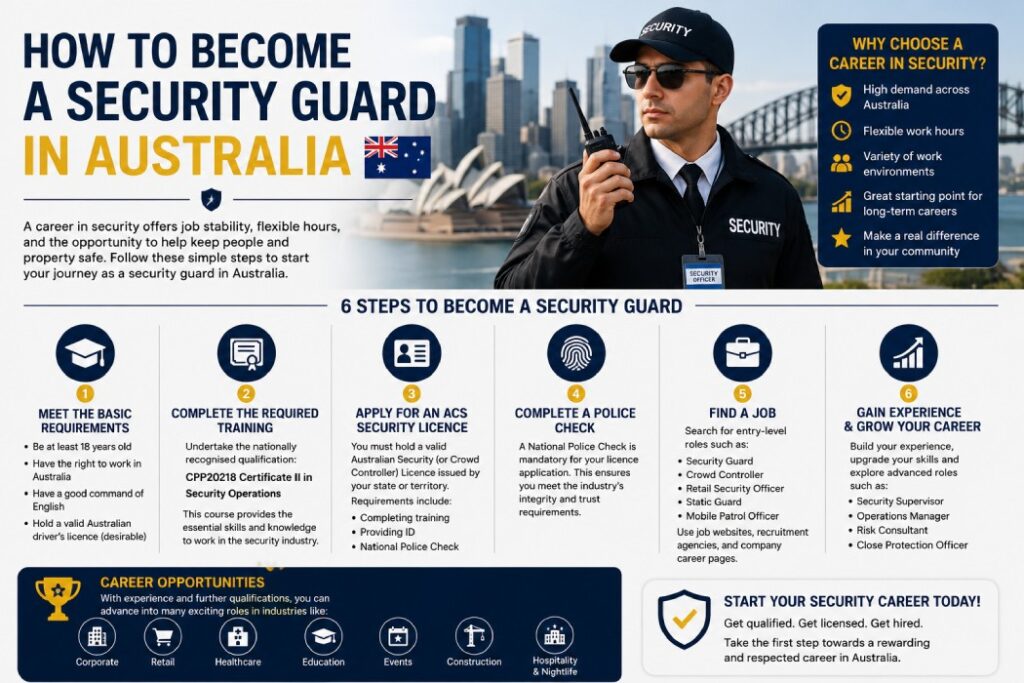
The security industry plays a vital role in protecting people, property, and businesses across Australia. From shopping centres and hospitals to major events, office buildings, construction sites, and airports, qualified security professionals help maintain safety and respond to potential risks. As demand for trained security personnel continues to grow, becoming a security guard offers an excellent opportunity for individuals seeking a stable and rewarding career.
If you’re interested in working in the security industry, one of the first steps is completing the CPP20218 – Certificate II in Security Operations. This nationally recognised qualification provides the practical knowledge and skills required to perform a variety of security duties while working professionally and ethically.
In this guide, you’ll learn what a security guard does, the skills required for success, career opportunities available after training, and how SDG College can help you begin your journey towards a career in the Australian security industry.
Why Choose a Career in Security?
A career in security offers more than just employment—it provides the opportunity to make a positive contribution to the safety of communities, businesses, and individuals. Security professionals work in a wide range of industries, making the role both diverse and rewarding.
Some of the reasons many people choose a career in security include:
- Growing demand for qualified security professionals.
- Opportunities to work in different industries.
- Career stability and long-term employment prospects.
- Practical, hands-on work environments.
- Opportunities for career progression.
- The ability to develop valuable communication and problem-solving skills.
Whether you’re entering the workforce for the first time or considering a career change, the security industry offers a range of pathways to suit different interests and career goals.
What Does a Security Guard Do?
Security guards are responsible for helping maintain safe and secure environments. Their duties vary depending on the workplace, but the primary objective is to protect people, property, and assets while responding professionally to incidents.
Common responsibilities include:
- Monitoring buildings and facilities.
- Conducting regular patrols.
- Observing and reporting suspicious behaviour.
- Controlling access to premises.
- Responding to alarms and emergencies.
- Providing customer service and assistance.
- Preparing incident reports.
- Following workplace security procedures.
Security guards often work closely with supervisors, emergency services, and other personnel to ensure safety is maintained at all times.
What Is CPP20218 – Certificate II in Security Operations?
The CPP20218 – Certificate II in Security Operations is a nationally recognised qualification designed for individuals who want to begin a career in Australia’s private security industry.
The course provides students with the knowledge and practical skills needed to perform routine security duties while following legal, ethical, and workplace requirements.
Throughout the course, students develop competencies in areas such as:
- Effective communication.
- Conflict resolution.
- Risk awareness.
- Patrol procedures.
- Incident reporting.
- Workplace safety.
- Customer service.
- Professional conduct.
These skills help prepare graduates for entry-level roles within the security industry.
Who Should Study Certificate II in Security Operations?
This course is suitable for individuals from a wide range of backgrounds who are interested in working in the security sector.
The qualification is ideal for:
- School leavers.
- Career changers.
- Job seekers.
- Individuals returning to the workforce.
- People interested in public safety.
- Those looking for practical vocational training.
No previous security experience is generally required, making this qualification an excellent starting point for beginners.
Essential Skills You’ll Develop
Professional security officers require a combination of technical knowledge, communication abilities, and sound judgement. During the CPP20218 course, students develop practical workplace skills that can be applied across a variety of security environments.
Communication Skills
Security professionals regularly interact with members of the public, clients, colleagues, and emergency services. Strong verbal and written communication skills are essential for providing clear instructions, reporting incidents, and maintaining professionalism.
Observation Skills
One of the most important responsibilities of a security guard is identifying unusual behaviour or potential risks before they escalate. Students learn how to remain alert, observe their surroundings, and recognise situations that require attention.
Conflict Resolution
Security personnel may occasionally deal with difficult situations involving upset or aggressive individuals. The course introduces practical techniques for managing conflict professionally while prioritising safety and following workplace procedures.
Professional Ethics
Integrity, honesty, and professionalism are essential qualities for anyone working in the security industry. Students learn the importance of acting responsibly, respecting privacy, and following legal and organisational requirements.
Industries That Employ Security Guards
Qualified security officers can find employment across many industries throughout Australia.
Common workplaces include:
- Shopping centres.
- Corporate office buildings.
- Construction sites.
- Hospitals and healthcare facilities.
- Hotels and entertainment venues.
- Sporting events and concerts.
- Educational institutions.
- Industrial facilities.
- Government buildings.
- Residential communities.
This variety allows security professionals to explore different work environments and gain valuable industry experience throughout their careers.
What Will You Learn in the CPP20218 – Certificate II in Security Operations?
The CPP20218 – Certificate II in Security Operations is designed to provide students with the practical knowledge, technical skills, and professional behaviours required to work confidently in Australia’s private security industry. Throughout the course, students develop competencies that prepare them for real workplace situations while understanding industry standards and legal responsibilities.
Key learning areas include:
- Maintaining professional workplace standards.
- Communicating effectively with clients and the public.
- Monitoring and protecting premises.
- Conducting security patrols.
- Managing conflict professionally.
- Preparing accurate workplace reports.
- Applying workplace health and safety procedures.
- Responding appropriately during emergencies.
These practical skills help graduates transition confidently into entry-level security roles.
Career Opportunities After Completing CPP20218
Completing the Certificate II in Security Operations can open the door to a variety of entry-level positions within Australia’s growing security industry. While specific employment opportunities may vary depending on licensing requirements and employer expectations, graduates are well prepared to pursue roles such as:
- Security Officer
- Static Guard
- Crowd Controller (where appropriately licensed)
- Gatehouse Security Officer
- Retail Security Officer
- Corporate Security Officer
- Construction Site Security Officer
- Hospital Security Officer
- Event Security Officer
- Mobile Patrol Assistant
With experience and additional qualifications, security professionals may progress into supervisory or specialist roles within the industry.
Why Soft Skills Matter in the Security Industry
Technical knowledge is important, but successful security professionals also rely on strong interpersonal skills. Security officers are often the first point of contact for visitors, customers, and staff, making professionalism and communication essential.
Throughout the course, students strengthen valuable soft skills, including:
- Professional communication.
- Customer service.
- Teamwork.
- Critical thinking.
- Problem-solving.
- Time management.
- Decision-making.
- Emotional control under pressure.
These transferable skills are valuable across many industries and contribute to long-term career success.
Workplace Health and Safety in Security Operations
Security professionals often work in dynamic environments where unexpected situations may occur. Understanding workplace health and safety (WHS) helps reduce risks while protecting both security personnel and the public.
During the course, students learn about:
- Identifying workplace hazards.
- Following organisational safety procedures.
- Using communication equipment safely.
- Responding to emergency situations.
- Incident reporting.
- Personal safety awareness.
Developing strong WHS knowledge allows security officers to respond confidently while maintaining a safe working environment.
Professional Conduct and Ethical Responsibilities
Security officers are trusted to protect people, property, and confidential information. Because of this responsibility, employers expect security personnel to demonstrate honesty, integrity, and professionalism at all times.
The course introduces students to professional standards such as:
- Maintaining confidentiality.
- Following workplace policies.
- Respecting diversity and inclusion.
- Providing excellent customer service.
- Acting professionally during incidents.
- Working ethically and responsibly.
Developing these professional behaviours helps graduates build positive relationships with employers, colleagues, and members of the public.
Why Choose SDG College?
At SDG College, we are committed to helping students build practical skills for successful careers. Our CPP20218 – Certificate II in Security Operations is delivered by experienced trainers who understand current industry expectations and workplace practices.
Students who choose SDG College benefit from:
- Nationally recognised training.
- Experienced trainers with industry knowledge.
- Practical, job-focused learning.
- A supportive learning environment.
- Career-focused education pathways.
- Student support throughout the learning journey.
Whether you’re beginning your first career or looking to enter the growing security industry, SDG College provides the knowledge and skills to help you achieve your goals.