
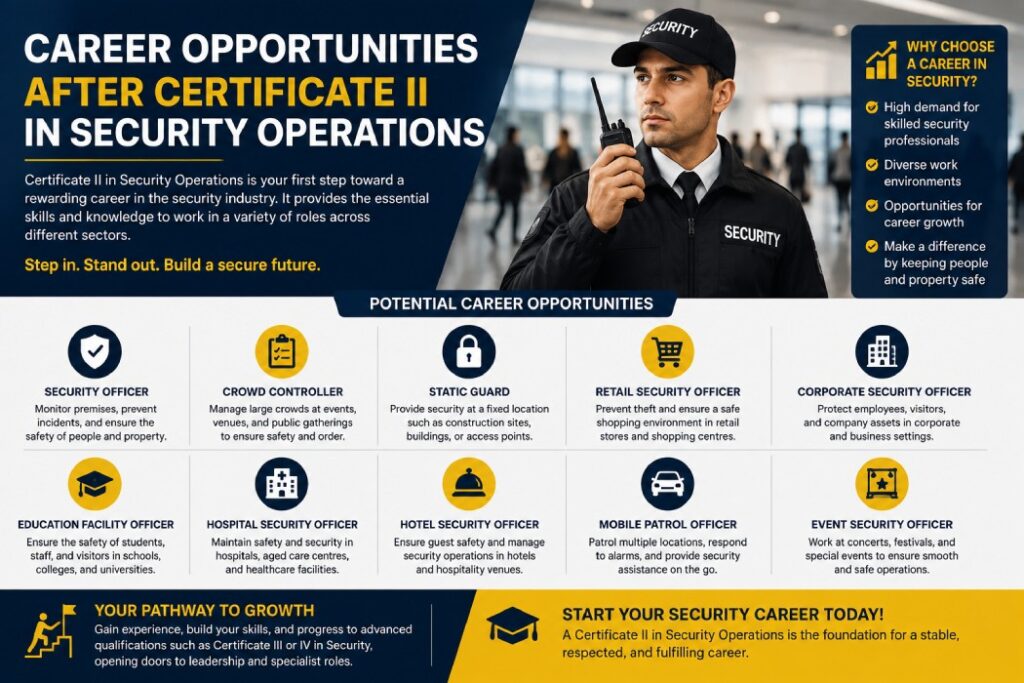
The security industry in Australia provides diverse career opportunities for individuals who want to work in a professional environment while helping protect people, property, and businesses. As organisations continue to prioritise safety and risk management, the demand for trained security professionals remains strong across many industries.
Completing the CPP20218 – Certificate II in Security Operations is an important step for individuals looking to begin a career in the private security sector. This nationally recognised qualification provides students with the essential knowledge and practical skills needed to perform entry-level security duties while following workplace procedures and industry expectations.
From retail security and corporate protection to event security and site monitoring, graduates can explore a range of career pathways depending on their interests and professional goals. In this guide, we will explore the different security career opportunities available after completing Certificate II in Security Operations and how SDG College can help you prepare for success.
Why Choose a Career in the Security Industry?
A career in security offers stability, variety, and the opportunity to make a meaningful contribution to community safety. Security professionals are required in almost every sector, creating consistent demand for qualified workers across Australia.
Many people choose security careers because they offer:
- Flexible employment opportunities.
- Work across different industries.
- Opportunities for career advancement.
- Practical and active work environments.
- The ability to develop valuable professional skills.
- Long-term career potential.
Whether you are starting your first job, changing careers, or looking for a role with more responsibility, the security industry provides pathways for professional growth.
What Is Certificate II in Security Operations?
The CPP20218 – Certificate II in Security Operations is a nationally recognised qualification designed for individuals who want to enter Australia’s private security industry.
The course provides students with the foundation skills required to perform security-related duties, including communication, patrol procedures, incident reporting, workplace safety, and professional conduct.
During the course, students learn how to:
- Communicate effectively in security environments.
- Monitor and protect premises.
- Identify potential security risks.
- Respond to incidents professionally.
- Prepare workplace reports.
- Apply workplace health and safety procedures.
- Provide professional customer service.
These skills help graduates build confidence and prepare for employment in various security roles.
Security Officer Career Opportunities
One of the most common career pathways after completing Certificate II in Security Operations is becoming a security officer. Security officers play an important role in maintaining safe environments by monitoring activities, protecting assets, and responding to workplace concerns.
Security officers may work in:
- Commercial buildings.
- Shopping centres.
- Construction sites.
- Healthcare facilities.
- Educational institutions.
- Industrial locations.
- Entertainment venues.
The daily responsibilities of a security officer may include:
- Conducting patrols.
- Monitoring security systems.
- Controlling access points.
- Assisting visitors.
- Reporting incidents.
- Supporting emergency responses.
This role is ideal for individuals who enjoy responsibility, problem-solving, and working with people.
Retail Security Career Opportunities
Retail security officers help protect shopping centres, stores, customers, and employees. They play an important role in preventing theft, managing incidents, and creating a safe shopping environment.
Retail security professionals may be responsible for:
- Monitoring retail areas.
- Preventing loss and theft.
- Assisting customers.
- Responding to incidents.
- Working with store management.
This career pathway is suitable for individuals who enjoy customer interaction and working in busy public environments.
Corporate Security Opportunities
Corporate security officers work in office buildings, business facilities, and professional workplaces where protecting employees, visitors, and company assets is a priority.
Typical duties may include:
- Managing building access.
- Monitoring visitors.
- Conducting security checks.
- Maintaining workplace safety.
- Responding to security concerns.
Corporate security roles often require strong communication skills, professionalism, and the ability to interact with employees and visitors respectfully.
Construction Site Security Careers
Construction projects often require security professionals to protect equipment, materials, and restricted areas. Construction site security officers help prevent unauthorised access and support overall site safety.
Responsibilities may include:
- Monitoring entry and exit points.
- Checking authorised access.
- Conducting site patrols.
- Protecting valuable equipment.
- Reporting suspicious activities.
This pathway can be especially suitable for individuals interested in working alongside Australia’s growing construction industry.
Event Security Career Opportunities
Australia hosts thousands of events every year, including concerts, sporting events, festivals, exhibitions, and community gatherings. Event security professionals play an important role in maintaining crowd safety and ensuring events operate smoothly.
After completing the CPP20218 – Certificate II in Security Operations, graduates may explore opportunities in event security environments where they can develop valuable experience working with the public.
Event security duties may include:
- Managing crowd movement.
- Monitoring entrances and exits.
- Checking tickets and access areas.
- Assisting with emergency situations.
- Supporting event organisers.
- Maintaining a safe environment for attendees.
This career pathway is suitable for individuals who enjoy fast-paced workplaces and interacting with different people.
Hospital and Healthcare Security Roles
Healthcare facilities require professional security officers to help maintain safe environments for patients, visitors, and healthcare workers. Hospitals can experience challenging situations that require trained security personnel who can respond calmly and professionally.
Healthcare security officers may assist with:
- Managing visitor access.
- Supporting staff safety.
- Responding to incidents.
- Monitoring hospital areas.
- Assisting during emergencies.
This type of security role requires excellent communication skills, patience, and the ability to handle sensitive situations professionally.
Mobile Patrol Security Opportunities
Mobile patrol security officers provide security services across multiple locations. Instead of remaining at one workplace, they travel between sites to conduct inspections, respond to alarms, and monitor properties.
Mobile patrol duties may include:
- Conducting scheduled property checks.
- Responding to security alarms.
- Inspecting buildings and facilities.
- Identifying safety concerns.
- Completing security reports.
This role can provide variety and independence for security professionals who prefer working across different locations.
Skills That Help You Succeed in Security Careers
While completing the Certificate II in Security Operations provides essential industry knowledge, successful security professionals also develop important personal and workplace skills.
Key skills employers look for include:
Communication Skills
Security officers communicate with clients, colleagues, visitors, and emergency services regularly. The ability to communicate clearly and professionally is essential for managing situations effectively.
Problem-Solving Skills
Security professionals often need to make quick decisions when dealing with unexpected situations. Strong problem-solving skills help officers assess risks and choose appropriate actions.
Attention to Detail
Security work requires awareness of surroundings and the ability to notice unusual behaviour, hazards, or changes within a workplace environment.
Professionalism
Security officers represent their employers and clients. Reliability, honesty, and respectful behaviour are important qualities that support career success.
Teamwork
Security professionals often work alongside other officers, supervisors, managers, and emergency personnel. Strong teamwork skills improve communication and workplace safety.
Career Growth Opportunities in Security
A career in security can provide opportunities for professional development and advancement. Many security professionals begin in entry-level positions and progress into more specialised or supervisory roles with experience.
Possible career progression pathways include:
- Senior Security Officer.
- Security Supervisor.
- Security Team Leader.
- Security Coordinator.
- Security Manager.
- Specialised Security Roles.
Additional training, workplace experience, and professional development can help security officers expand their career options over time.
Industries Hiring Security Professionals in Australia
The demand for qualified security workers exists across many sectors. Graduates of the CPP20218 Certificate II in Security Operations can explore employment opportunities in industries such as:
- Retail and shopping centres.
- Corporate offices.
- Construction and infrastructure.
- Healthcare facilities.
- Education providers.
- Hospitality and tourism.
- Entertainment venues.
- Government facilities.
- Industrial workplaces.
- Residential communities.
This variety allows security professionals to choose environments that match their interests, skills, and career goals.
How SDG College Helps You Start Your Security Career
Choosing the right training provider is an important step when beginning your security career. At SDG College, students receive practical, industry-focused education designed to prepare them for workplace success.
The CPP20218 – Certificate II in Security Operations course helps students develop the knowledge and confidence needed to enter Australia’s security industry.
Students benefit from:
- Nationally recognised training.
- Experienced and supportive trainers.
- Industry-relevant course content.
- Practical workplace skills.
- A supportive learning environment.
- Career-focused education pathways.
Whether you want to work in retail security, corporate security, event security, or another area of the industry, SDG College can help you build the foundation for a successful security career.