
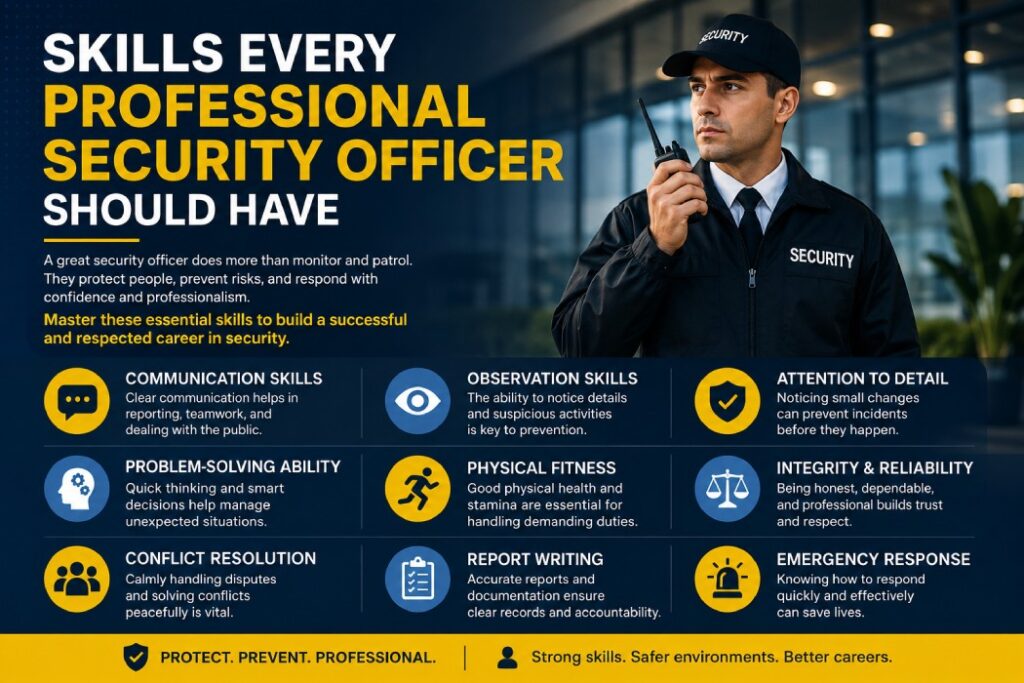
The security industry plays an important role in protecting people, businesses, property, and public spaces across Australia. Professional security officers work in a variety of environments, including shopping centres, corporate buildings, events, construction sites, and private facilities.
To succeed in this industry, security officers need more than just physical presence. They require a combination of communication skills, problem-solving abilities, safety awareness, and professional behaviour to handle different situations effectively.
The CPP20218 – Certificate II in Security Operations helps students develop the essential knowledge and skills required to begin a career in the security industry. The course focuses on preparing learners for real workplace situations and developing the abilities employers value.
In this guide, we will explore the most important skills every security officer should have and how developing these skills can help build a successful security career.
What Does a Professional Security Officer Do?
A professional security officer is responsible for maintaining safety, preventing incidents, and protecting people and property. Security officers work in different environments and perform a range of duties depending on their role and workplace requirements.
Common responsibilities of security officers include:
- Monitoring security areas.
- Identifying potential risks.
- Responding to incidents.
- Managing access control.
- Communicating with customers and staff.
- Writing incident reports.
- Supporting emergency procedures.
Because security officers often deal with unexpected situations, having the right professional skills is essential for performing their duties effectively.
Why Skills Are Important in Security Operations
Security work requires individuals who can remain calm, make responsible decisions, and communicate effectively during different situations. A skilled security officer can help prevent problems before they become serious and respond appropriately when incidents occur.
Developing strong security skills helps officers:
- Improve workplace safety.
- Handle challenging situations professionally.
- Build trust with clients and the community.
- Respond effectively to emergencies.
- Improve career opportunities.
The right combination of knowledge and practical skills allows security professionals to provide better protection and service.
Skill 1: Strong Communication Skills
Communication is one of the most important skills every security officer should have. Security officers regularly interact with customers, employees, supervisors, emergency services, and members of the public.
Effective communication helps security officers:
- Provide clear instructions.
- Manage difficult conversations.
- Report incidents accurately.
- Work effectively with teams.
- Prevent misunderstandings.
A professional security officer must be able to communicate calmly and respectfully, especially during stressful situations.
Skill 2: Observation and Attention to Detail
Security officers need strong observation skills because identifying potential risks early can help prevent incidents. Paying attention to small details allows officers to notice unusual behaviour, safety concerns, or security issues.
Important observation skills include:
- Monitoring surroundings carefully.
- Recognising unusual activities.
- Identifying potential threats.
- Remembering important details.
- Following workplace procedures.
Strong attention to detail helps security officers make informed decisions and maintain safer environments.
Skill 3: Conflict Management Skills
Security officers may sometimes deal with challenging situations involving disagreements, complaints, or aggressive behaviour. Knowing how to manage conflict professionally is essential.
Conflict management skills include:
- Remaining calm under pressure.
- Listening carefully to concerns.
- Using professional communication.
- Reducing tension safely.
- Finding appropriate solutions.
Effective conflict management helps prevent situations from escalating and allows security officers to maintain control while treating people respectfully.
Skill 4: Problem-Solving Ability
Security officers often need to make quick decisions when unexpected situations occur. Strong problem-solving skills help them assess situations and choose appropriate actions.
Problem-solving involves:
- Assessing risks.
- Understanding available options.
- Following security procedures.
- Making responsible decisions.
- Seeking assistance when required.
A security professional who can think clearly during difficult situations can provide better protection and support.
Skill 5: Understanding of Safety Procedures
Safety knowledge is essential for every security officer. Professionals must understand workplace procedures, emergency responses, and risk management practices.
The CPP20218 – Certificate II in Security Operations helps students develop knowledge about:
- Security operations.
- Workplace safety requirements.
- Emergency response procedures.
- Risk identification.
- Incident reporting.
Understanding safety procedures allows security officers to perform their responsibilities confidently and professionally.
Skill 6: Physical Fitness and Alertness
Security work often requires officers to remain alert for extended periods and respond quickly when situations arise. While security roles vary, maintaining physical fitness and mental alertness can help officers perform their duties effectively.
Physical and mental readiness helps security officers:
- Remain attentive during long shifts.
- Respond quickly to incidents.
- Move safely around workplaces.
- Handle challenging situations professionally.
- Maintain energy and focus.
Being physically prepared and mentally alert allows security professionals to provide reliable protection and support in different environments.
Skill 7: Professionalism and Reliability
Professional behaviour is one of the most valuable qualities in the security industry. Security officers often represent their employers and are responsible for creating a safe and positive environment.
Professional security officers should demonstrate:
- Punctuality and reliability.
- Respectful communication.
- Positive workplace behaviour.
- Responsibility and accountability.
- Confidence and professionalism.
Employers value security officers who can be trusted to handle responsibilities and represent their organisation professionally.
Skill 8: Teamwork and Coordination
Security officers rarely work completely alone. Many security operations require teamwork between officers, supervisors, clients, emergency services, and other workplace personnel.
Strong teamwork skills help security professionals:
- Share important information.
- Coordinate responses.
- Support other team members.
- Follow workplace instructions.
- Improve overall security operations.
Effective teamwork creates stronger security outcomes and helps organisations maintain safer environments.
Skill 9: Report Writing Skills
Accurate reporting is an essential responsibility for many security officers. Reports help document incidents, communicate important information, and support workplace decision-making.
Good report writing skills include:
- Recording information accurately.
- Describing incidents clearly.
- Including important details.
- Following reporting procedures.
- Maintaining professional documentation.
Clear and accurate reports demonstrate professionalism and help organisations respond effectively to security situations.
Skill 10: Customer Service Skills
Many security officers interact with members of the public, customers, visitors, and employees. Customer service skills help officers provide assistance while maintaining safety and professionalism.
Customer service skills include:
- Helping people respectfully.
- Answering questions professionally.
- Providing directions and support.
- Managing concerns calmly.
- Creating positive interactions.
Security officers with strong customer service skills can improve the experience of people in the environments they protect.
How Certificate II in Security Operations Helps Develop These Skills
The CPP20218 – Certificate II in Security Operations is designed to help students develop the practical skills and knowledge required for entry-level security roles in Australia.
The course helps learners build important abilities including:
- Security risk awareness.
- Communication techniques.
- Incident response skills.
- Workplace safety knowledge.
- Conflict management approaches.
- Professional security practices.
By completing this qualification, students can develop the confidence needed to begin their journey in the security industry.
Career Opportunities After Developing Security Officer Skills
Developing strong security skills can open opportunities across various industries. Security professionals are needed in many environments where safety, protection, and customer support are important.
Career opportunities may include:
- Security Officer.
- Crowd Controller.
- Event Security Officer.
- Retail Security Officer.
- Corporate Security Officer.
- Mobile Patrol Officer.
- Loss Prevention Officer.
With additional experience and training, security professionals can continue progressing into specialised and supervisory roles.
Industries Hiring Security Professionals in Australia
Security officers work across many industries because organisations need professionals who can help protect people, assets, and property.
Common industries hiring security professionals include:
- Retail and shopping centres.
- Events and entertainment venues.
- Corporate offices.
- Construction sites.
- Hospitality businesses.
- Healthcare facilities.
- Educational institutions.
- Government facilities.
This variety allows security professionals to choose work environments that match their interests and career goals.
Why Choose SDG College for CPP20218 Security Training?
At SDG College, students receive practical and career-focused training designed to prepare them for security industry requirements. The CPP20218 – Certificate II in Security Operations course helps learners develop essential skills needed for professional security roles.
Students benefit from:
- Nationally recognised training.
- Industry-focused course content.
- Experienced trainers.
- Practical learning approach.
- Supportive learning environment.
- Career development opportunities.
Whether you are starting a new career or building your professional skills, SDG College can help you develop the knowledge and abilities needed to succeed in the security industry.
Frequently Asked Questions (FAQ)
What skills should a professional security officer have?
A professional security officer should have communication skills, observation skills, conflict management abilities, problem-solving skills, teamwork skills, and strong safety awareness.
How does Certificate II in Security Operations help security officers?
The qualification provides practical training in security procedures, communication, risk management, incident response, and workplace safety.
Are communication skills important for security officers?
Yes. Security officers need strong communication skills to interact with people, manage situations, and report incidents effectively.
Can security skills improve career opportunities?
Yes. Developing professional security skills can help individuals access roles in events, retail, corporate security, and other industries.
What qualification is needed to become a security officer in Australia?
CPP20218 – Certificate II in Security Operations is a recognised qualification pathway for people interested in starting a career in the Australian security industry.